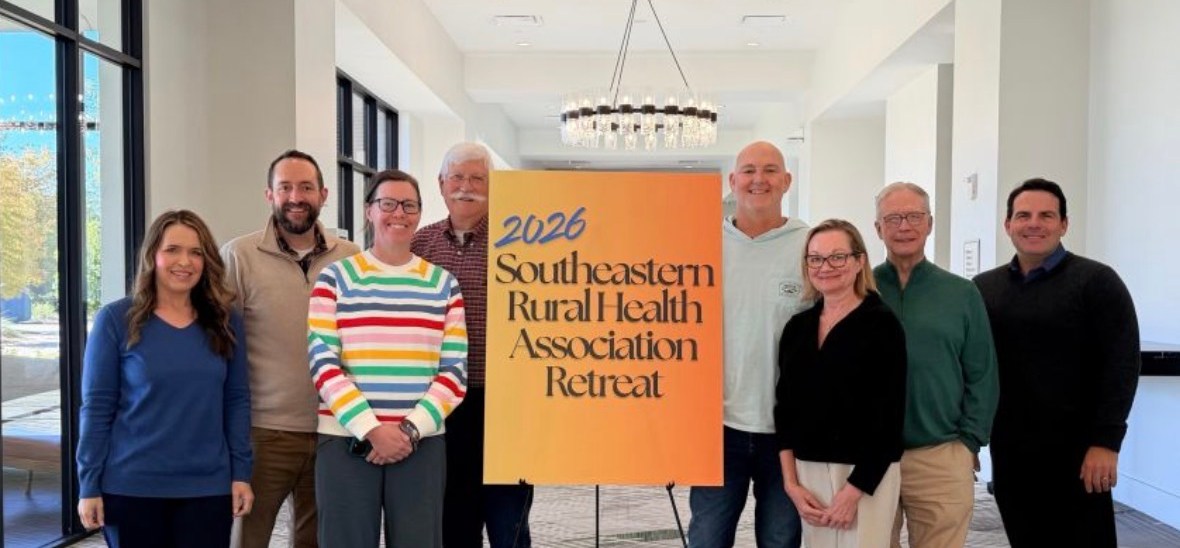
Rural Health Associations Gather for Southeastern US Retreat Focused on Sustainability and Growth

Representatives from the Arkansas, Mississippi, Alabama and Georgia Rural Health Associations gathered November 13-14, 2026, at the Sheraton in Flowood, Mississippi, for the Southeastern US Rural Health Retreat. Supported by funding through the National Rural Health Association, the retreat provided an opportunity to exchange ideas, strengthen relationships and explore strategies for the sustainability and growth of the participating associations.

Special guest Jed Hanson of the Nebraska Rural Health Association joined the group, contributing an additional state perspective and leading a session on building sustainable association revenue. Throughout the two-day gathering, participants explored how stronger associations can better support their members and the rural communities they serve.

The retreat opened with a state association roundtable focused on operations, finances, membership, challenges and successes. Representatives shared experiences from their respective states and examined common needs and practices that could be useful across association boundaries.

A discussion titled “What Is Our Why?” encouraged participants to consider their associations’ purpose, member value and relevance. The session focused on whom associations serve, the problems they help solve and the benefits that encourage members to join and renew. These questions helped frame the retreat’s broader emphasis on building organizations with a clear mission and lasting value.

Saturday’s agenda turned to sustainable revenue and practical opportunities for growth. Following the revenue presentation, a working discussion gave participants time to consider which ideas could fit their own associations and what resources would be needed to move them forward.

Additional sessions addressed grant-funded projects and the Rural Health Transformation Program, including association roles, implementation challenges and opportunities for shared technical assistance. A state policy and advocacy exchange provided space to compare priorities and consider resources that could support rural health efforts across state lines.

The retreat also emphasized partnerships, with dedicated time to explore practical collaborations and identify next steps for continued work. Informal conversations and networking complemented the structured sessions, helping strengthen the relationships that make ongoing cooperation possible.

The discussions will help inform sustainability and growth efforts within the participating associations while creating opportunities for continued regional collaboration. The retreat reinforced a shared commitment: stronger associations are better positioned to help build stronger rural communities.
Mississippi Rural Health Conference Draws Near-Record Attendance, Celebrates Leaders and Advances Rural Healthcare

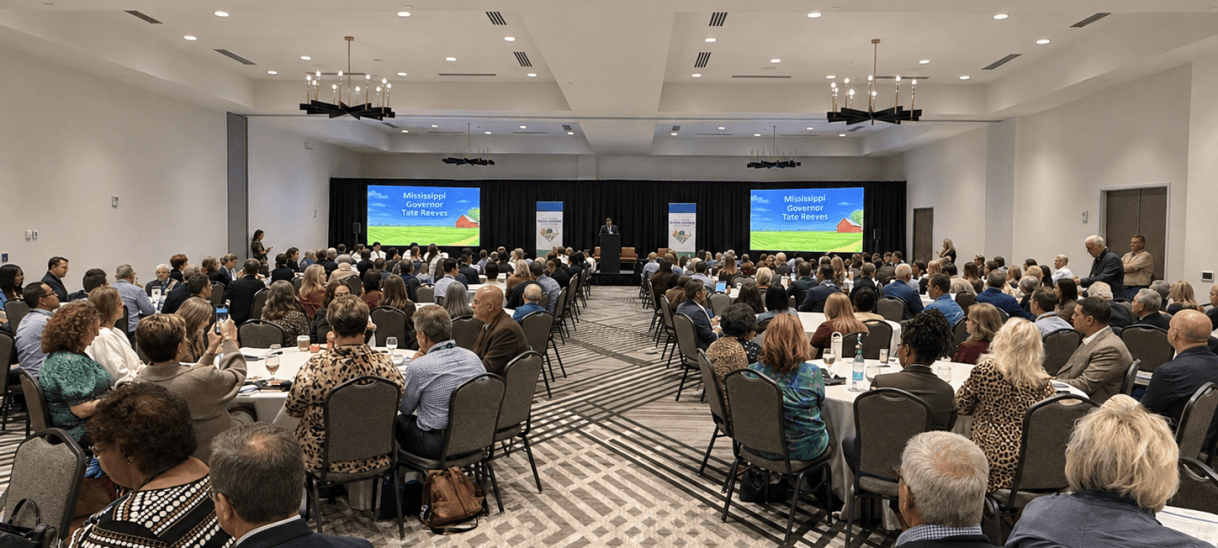
More than 260 rural health professionals and 30 vendors gathered in Flowood November 11-13 for the 31st Annual Mississippi Rural Health Conference, marking near-record attendance for both participants and exhibitors. Hosted by the Mississippi Rural Health Association (MRHA) in partnership with the Mississippi Center for Rural Health, the conference featured exceptional and timely presentations, direct conversations with state leaders, and recognition of the people and organizations strengthening healthcare in Mississippi’s rural communities.

The conference began with a pre-conference Rural Health Clinic Workshop led by Joanie Perkins of JP Consulting and Kate Hill of The Compliance Team. The workshop drew 45 attendees for an in-depth look at RHC billing, compliance requirements, and survey readiness. Participants explored common challenges and strategies to help clinics prepare for surveys and strengthen day-to-day operations.

State healthcare policy took center stage during the main conference. A legislative panel featuring Sen. Kevin Blackwell and Rep. Sam Creekmore IV gave attendees an opportunity to discuss issues affecting rural providers and communities ahead of the 2027 legislative session. Governor Tate Reeves delivered a special address highlighting Mississippi’s healthcare priorities and rural health transformation efforts.

The educational program addressed pressing needs across rural healthcare. Sessions included a Mississippi Medicaid update from Jennifer Wentworth, along with presentations on the rural physician workforce, FLEX and SHIP programs, and patient financing. Additional discussions explored veterans’ access to care through VA External Provider Scheduling, rural hospital sustainability, and coordination of emergency ground and air medical transportation.

A rural hospital panel featuring Chad Netterville, Jeff Bedford, Chris Threadgill, and Jim Blackwood brought provider perspectives to the challenges of workforce shortages, financial pressures, and maintaining essential services. The closing session focused on the Rural Health Transformation Program, including program design, contracting, implementation, and opportunities for providers to put these investments to work.

Throughout the conference, attendees connected with vendors and colleagues, participated in constituency breakout discussions, and celebrated rural healthcare during the Mississippi Rural Health Day Reception. Mississippi Rural Physician Scholars’ community health needs assessment posters also highlighted the work of future physicians preparing to serve communities across the state.

The awards banquet recognized outstanding service, leadership, and healthcare quality. MRHA’s 2026 association award recipients included:

  • State Legislator of the Year: Rep. Sam Creekmore IV.
  • National Legislator of the Year: U.S. Congressman Michael Guest, with the award accepted by Brady Stewart.
  • Mary Ann Sones Distinguished Leadership Award: State Health Officer Daniel Edney, MD, FACP, FASAM.
  • One Rural Award: The Office of Governor Tate Reeves, recognizing its work with the Rural Health Transformation Program.

The Mississippi Office of Rural Health presented the Community STAR Award to G.A. Carmichael Family Health Center and Dr. James L. Coleman, Jr. Hospital Quality Awards recognized the following facilities, based on quality assessment data from The Chartis Group:

  • Baptist Memorial Hospital–Calhoun, Calhoun City.
  • Memorial Hospital–Leake, Carthage.
  • Tallahatchie General Hospital, Charleston.
  • Covington County Hospital, Collins.
  • Ochsner Stennis Hospital, De Kalb.
  • North Mississippi Medical Center–Eupora.
  • North Mississippi Medical Center–Iuka.
  • Baptist Memorial Hospital–Attala, Kosciusko.
  • North Mississippi Medical Center–Pontotoc.
  • Ochsner Watkins Hospital, Quitman.
  • Tippah County Hospital, Ripley.
  • Ochsner Laird Hospital, Union.

The annual membership meeting also recognized outgoing board member Manda Griffin, welcomed Michael Nester, CEO of Winston Medical Center, as the newly elected board member for the 2027–2029 term, and featured an incoming president’s message from Janet Benzing.

The second annual Mississippi Rural Health Golf Tournament added friendly competition and another opportunity to connect before the main conference. Tournament winners were:

  • First place: Brian Threadgill, Adam Threadgill, and Jeremy Wilcher.
  • Second place: WD Heath, Matt Wilkinson, John Buchanon, and Rudy Runnels.
  • Third place: David Sinclair, Kyle Brewer, Keith West, and Bob Dickens.

MRHA thanks the speakers, sponsors, vendors, and attendees who helped make the 2026 conference a success. Strong participation and timely discussions reflected a shared commitment to improving access to care and building a stronger future for rural healthcare throughout Mississippi.

Applications Now Open for Mississippi Rural Health Transformation Program Funding

The wait is over. Applications are now officially open for the first round of funding opportunities through the Mississippi Rural Health Transformation Program (RHTP), marking a significant milestone in what is expected to be one of the largest investments in rural healthcare in Mississippi history. Eligible organizations are encouraged to begin preparing and submitting applications as the state launches the first phase of funding under this transformative initiative.

Mississippi was awarded more than $205 million in first-year funding through the federal Rural Health Transformation Program and is expected to receive more than $1 billion over five years to strengthen healthcare access, workforce capacity, infrastructure, technology, and care delivery across rural communities. State leaders have emphasized that these investments are intended to create lasting improvements in healthcare access and sustainability throughout rural Mississippi.

The first funding cycle focuses on three key areas identified as priorities in Mississippi’s Rural Health Transformation Plan:

  • BRIDGE (Building Rural Infrastructure for Delivery, Growth, and Efficiency) – supporting facility renovations, infrastructure improvements, service expansion, equipment acquisition, and operational enhancements that address healthcare gaps in rural communities.
  • HTAM (Health Technology Advancement and Modernization) – supporting technology modernization, cybersecurity improvements, health information technology investments, and other projects designed to strengthen healthcare operations and care coordination.
  • TAPS (Telehealth Adoption and Provider Support) – expanding telehealth access through technology, equipment, provider training, patient engagement, and innovative models that bring care closer to where patients live.

According to the Mississippi RHT Program Office, applications opened on June 15 and will remain available through July 15. Following the review process, award announcements are expected in August 2026. Organizations interested in applying should carefully review eligibility requirements, funding priorities, and application instructions available through the program website.

Healthcare providers, hospitals, rural health clinics, community organizations, local governments, and other eligible entities are encouraged to explore the available opportunities and consider how these investments can help address local healthcare needs. Program officials have repeatedly emphasized that the goal is to fund projects that create meaningful, measurable improvements in access to care and health outcomes for rural Mississippians.

The Mississippi Rural Health Transformation Program represents an unprecedented opportunity to strengthen rural healthcare systems, improve access to services, modernize facilities and technology, and ensure that rural communities remain healthy and vibrant for generations to come. Eligible organizations should begin their application process as soon as possible to take advantage of this historic funding opportunity.

Click here to apply online

Learn More About the Mississippi Rural Health Transformation Program – Informational Sessions Announced

Mississippi is entering an exciting new chapter in rural healthcare through the Mississippi Rural Health Transformation Program (RHTP), a historic investment designed to strengthen healthcare access, infrastructure, workforce development, technology, and community health outcomes across rural communities throughout the state.

The Mississippi Rural Health Transformation Program represents a significant opportunity for healthcare providers, communaity organizations, local governments, and other stakeholders to participate in initiatives that will help transform the future of healthcare delivery in rural Mississippi. Through strategic investments and collaborative planning, the program seeks to improve access to care, enhance healthcare quality, support innovation, and address the unique challenges facing rural communities.

To help stakeholders better understand the program and upcoming opportunities, Mississippi will host a statewide virtual informational session on Monday, June 1, at 2:00 p.m. Central Time. This session will provide an overview of the program, discuss current activities, and allow participants to learn more about how they can engage with the Rural Health Transformation effort.

Register for the June 1 informational session here

In addition, regional listening sessions are being held across Mississippi to gather input from healthcare providers, community leaders, local organizations, and residents. These meetings are designed to ensure that local priorities and perspectives help guide future Rural Health Transformation Program investments and initiatives.

Upcoming regional listening sessions include:

  • Pearl – June 4
  • Ellisville – June 5
  • Summit – June 5
  • Tupelo – June 9
  • Cleveland – June 10

Additional details regarding meeting locations, registration information, program updates, and resources are available at:
www.mississippirhtp.com

The Mississippi Rural Health Association encourages all rural healthcare stakeholders to participate in these important discussions. Your input will help shape the future of healthcare delivery and investment in rural Mississippi for years to come

Governor Reeves Launches New Website to Drive Mississippi’s Rural Health Transformation Efforts

Governor Tate Reeves has announced the launch of a new statewide website, Mississippi Rural Health Transformation Program website, designed to serve as a central hub for Mississippi’s ambitious rural health transformation efforts.

The site, available at mississippirhtp.com, is part of the broader Mississippi Rural Health Transformation Program (RHTP), a federally supported initiative aimed at strengthening healthcare access, workforce capacity, and infrastructure across the state’s rural communities. The program stems from a nationwide investment to improve healthcare delivery systems and long-term outcomes in underserved areas.

A Central Resource for a Historic Investment

Mississippi’s new platform comes at a critical time, as the state prepares to deploy nearly $206 million in federal funding awarded through the RHTP. These funds are part of a larger five-year, $50 billion national initiative focused on stabilizing and transforming rural healthcare systems.

According to the Governor’s office, the website will function as a clearinghouse for program updates, funding opportunities, and stakeholder engagement, providing transparency and coordination as the state rolls out its rural health strategy.

Focus on Long-Term Transformation

The Rural Health Transformation Program is designed to go beyond short-term fixes, emphasizing sustainable, system-wide improvements. Key priorities include:

  • Expanding access to care, including telehealth services
  • Strengthening the rural healthcare workforce
  • Investing in healthcare infrastructure and technology
  • Improving patient outcomes through coordinated care models

Mississippi’s plan aligns with these national priorities while tailoring initiatives to the state’s unique rural health challenges, including hospital sustainability and provider shortages.

Vision for Rural Mississippi

Governor Reeves has consistently framed the initiative as a long-term commitment to rural communities. The state’s broader plan aims to ensure that by the end of the decade, every rural Mississippian has reliable access to high-quality healthcare, whether delivered in-person or through telehealth solutions.

State leaders note that the new website will play a critical role in achieving that vision by improving communication between government agencies, healthcare providers, and community stakeholders.

Looking Ahead

As Mississippi begins implementation, the launch of the new site signals a shift from planning to execution. With significant federal funding secured and a centralized platform now in place, state officials are positioning the Rural Health Transformation Program as one of the most consequential healthcare initiatives in Mississippi’s recent history.

Stakeholders across healthcare, policy, and economic development sectors are expected to engage with the site in the coming months as funding opportunities and program details continue to roll out. We look forward to the release of RFPs respective to funding in the near future.

Mississippi: Input Needed on Mobile Health Clinics Across the State

The National Rural Health Association, in partnership with the Leon Lowenstein Foundation, is leading a national initiative to better understand how mobile health clinics are supporting rural communities. As part of this effort, an environmental scan is being conducted to identify current mobile health activities, successful care models, and promising practices across the country, including here in Mississippi.

This work will directly inform a national report outlining policy opportunities and funding strategies to strengthen rural health infrastructure at both the state and federal levels. Mississippi stakeholders have a unique opportunity to ensure that the realities, challenges, and innovations happening across our rural communities are reflected in this work. Mobile clinics are playing an increasing role in expanding access to care, and your insight is critical to shaping future support for these models.

The Mississippi Rural Health Association encourages providers, health systems, community organizations, and policymakers to contribute. If you are aware of mobile health initiatives in Mississippi or can recommend individuals for informational interviews, your input is needed. Please contact Mory Bell at Mbell@ruralhealth.us or Marguerite Peterseim at Mpeterseim@ruralhealth.us to share information and help elevate Mississippi’s voice in this important national effort.

Franklin County Hospital Secures Critical Federal Support to Remain Open

Franklin County Hospital, a valued member of the Mississippi Rural Health Association, has received critical federal support that strengthens its ability to continue serving patients in Franklin County and surrounding rural communities.

As part of the FY2026 Labor, Health and Human Services appropriations package signed into law on February 3, congressional leaders included language reinstating the hospital’s Critical Access Hospital (CAH) designation. Cindy Hyde-Smith helped lead the effort to secure this provision after the designation was rescinded earlier this year, a change that placed the hospital’s financial stability and access to essential federal rural health resources at serious risk.

The restoration of CAH status ensures Franklin County Hospital remains eligible for enhanced Medicare reimbursement and federal support programs designed to sustain rural hospitals. Hospital leaders and rural health advocates have emphasized that without this action, the loss of CAH designation could have forced the hospital to reduce services or close entirely, leaving residents without local access to emergency and inpatient care.

This action underscores the importance of continued advocacy for rural hospitals facing regulatory and financial pressures. Franklin County Hospital’s situation reflects challenges experienced by many small rural facilities nationwide, and its successful designation reinstatement represents a meaningful step toward preserving local healthcare access in Mississippi’s rural communities.

The Mississippi Rural Health Association applauds efforts that protect hospitals like Franklin County Hospital and remains committed to advocating for policies that ensure the long-term viability of rural healthcare providers across the state.

Mississippi Rural Health Association Celebrates a Successful 2025 Rural Health Conference

The Mississippi Rural Health Association proudly hosted the 30th Annual Mississippi Rural Health Conference from November 19 to 21 in Flowood, drawing more than 280 attendees from across the state. The event highlighted the strength, innovation, and collaboration that continue to define rural healthcare in Mississippi. With 32 exhibitors, multiple networking events, and a robust lineup of expert speakers, the conference served as a major gathering point for hospital leaders, clinic administrators, policymakers, educators, and healthcare professionals committed to improving access and outcomes in rural communities.

The conference opened with a special Rural Health Golf Tournament, giving participants an enjoyable opportunity to connect informally before the main sessions began. Attendees also benefited from a comprehensive pre conference workshop led by Joanie Perkins, who provided detailed guidance on updating Rural Health Clinic policy and procedure manuals in preparation for evolving regulatory expectations. On Thursday, the Mississippi Maternal and Child Health Conference featured sessions on maternal mental health, telehealth supported maternity care, and early childhood screenings that addressed hearing, nutrition, and developmental needs. These sessions emphasized evidence based strategies designed to improve outcomes for mothers and children throughout the state.

Main conference sessions delivered a strong focus on current rural health priorities and future opportunities. One of the most anticipated presentations was the National Rural Health Update delivered by Alan Morgan, Chief Executive Officer of the National Rural Health Association, who provided invaluable insight into national policy trends. Additional highlights included an update on the Mississippi Rural Health Transformation Fund, a legislative panel with Senator Kevin Blackwell and Representative Sam Creekmore, a hospital leadership panel featuring four Mississippi hospital executives, and a rural health clinic panel led by two seasoned rural health clinic professionals. The closing keynote by Dr. Kollin Napier explored the expanding role of artificial intelligence in rural healthcare settings and its potential to strengthen patient care and operational efficiency.

A major highlight of the conference was the annual Awards Banquet, where outstanding leaders and organizations were recognized for their contributions to rural health. Representative Trey Lamar was honored as State Legislator of the Year, and US Senator Cindy Hyde Smith received the National Legislator of the Year Award. Toby Butler received the Mary Ann Sones Distinguished Leadership Award, as well as special recognition for his service as President of the Mississippi Rural Health Association. Greg Gibbes was presented the One Rural Award for his significant work in unifying and strengthening Mississippi’s rural health landscape. Several hospitals were also recognized with the Mississippi Rural Health Day Hospital Quality Award, including Baptist Memorial Hospital Attala, Baptist Memorial Hospital Calhoun, Baptist Memorial Hospital Leake, Ochsner Watkins Hospital, Ochsner Stennis Hospital, Ochsner Scott Regional Hospital, North Mississippi Medical Center Pontotoc, Tallahatchie General Hospital, Tippah County Hospital, and Franklin County Memorial Hospital.

Throughout the three day event, networking remained a central theme, with opportunities built into every part of the agenda. The Mississippi Rural Health Day Reception, the exhibit hall, poster judging activities, and numerous breakout discussions created meaningful spaces for attendees to collaborate, learn from one another, and develop new partnerships. With its strong attendance, diverse educational offerings, and recognition of exceptional rural health leaders, the 2025 Mississippi Rural Health Conference successfully celebrated both the progress achieved and the ongoing commitment to strengthening rural healthcare across Mississippi.

Governor Reeves Unveils Mississippi’s Rural Health Transformation Program Plan

Governor Tate Reeves announced the State of Mississippi has submitted its Rural Health Transformation Program Plan to the Centers for Medicare & Medicaid Services. Mississippi’s plan, which was developed with broad input from key stakeholders across the state, is focused on improving healthcare and patient outcomes for Mississippians, strengthening the state’s rural health workforce, and ensuring sustainable access to care for those who need it most. When fully implemented, the goal of the plan is to ensure that by 2031, every rural Mississippian will have reliable access to high-quality healthcare services, both in-person and through telehealth, supporting increased access points and healthier communities across the state. 

“The Rural Health Transformation Program is a once-in-a-generation opportunity to make a lasting impact on the health of our rural communities,” said Governor Tate Reeves. “While Mississippi has long faced challenges in delivering access to quality healthcare in rural areas, our plan is designed to address those challenges head-on. We are ready to implement our plan with accountability, transparency, and results-driven oversight.”

The Office of the Governor will lead the oversight and coordination of the Program. It will work closely with the Mississippi Department of Health, which houses the State Office of Rural Health, and the Mississippi Division of Medicaid, a division of the Office of the Governor.

Mississippi’s plan is broken into six initiatives and designed to benefit residents across the state. The six initiatives are:

  • Statewide Rural Health Assessment: Mississippi will engage a third-party to conduct a comprehensive statewide assessment of rural healthcare needs, both today and looking forward ten years.
  • The Coordinated Regional Integrated Systems Initiative: This initiative is designed to transform rural healthcare delivery across the state by creating a connected, data-driven network of emergency, clinical and community-based services.
  • The Workforce Expansion Initiative: This initiative is designed to strengthen the healthcare workforce in rural areas, improving access, continuity, and quality of care. Through targeted programs, the initiative addresses recruitment, retention, training, and career pathway development for all healthcare professionals.
  • The Health Technology Advancement and Modernization Initiative: This initiative is designed to modernize rural healthcare systems by strengthening the digital backbone that supports high-quality, coordinated, and secure care.
  • The Telehealth Adoption and Provider Support Initiative: This initiative is designed to strengthen rural healthcare by increasing virtual care access, supporting providers in adopting telehealth, and exploring innovative payment models. Investments will enhance connectivity, technology, and diagnostic tools to enable real-time remote care.
  • The Building Rural Infrastructure for Delivery, Growth and Efficiency Initiative: This initiative is designed to strengthen rural healthcare infrastructure by improving access to specialized care, closing care gaps, and supporting innovative pilot programs that enhance healthcare delivery and improve outcomes. The initiative focuses on building physical, operational, and programmatic capacity to address unmet needs, improve care coordination and foster sustainable rural healthcare systems.

“I’d like to thank President Trump, Secretary Kennedy, and Administrator Oz for the opportunity to submit this plan,” said Governor Tate Reeves. “We are excited to make meaningful and lasting change in the delivery of healthcare throughout Mississippi. I know that together, our plan will make a positive impact on the lives of Mississippians in rural communities across our state.”

Originally published at https://governorreeves.ms.gov/governor-reeves-unveils-mississippis-rural-health-transformation-program-plan/.

Joanie Perkins Nationally Awarded for Outstanding Achievement

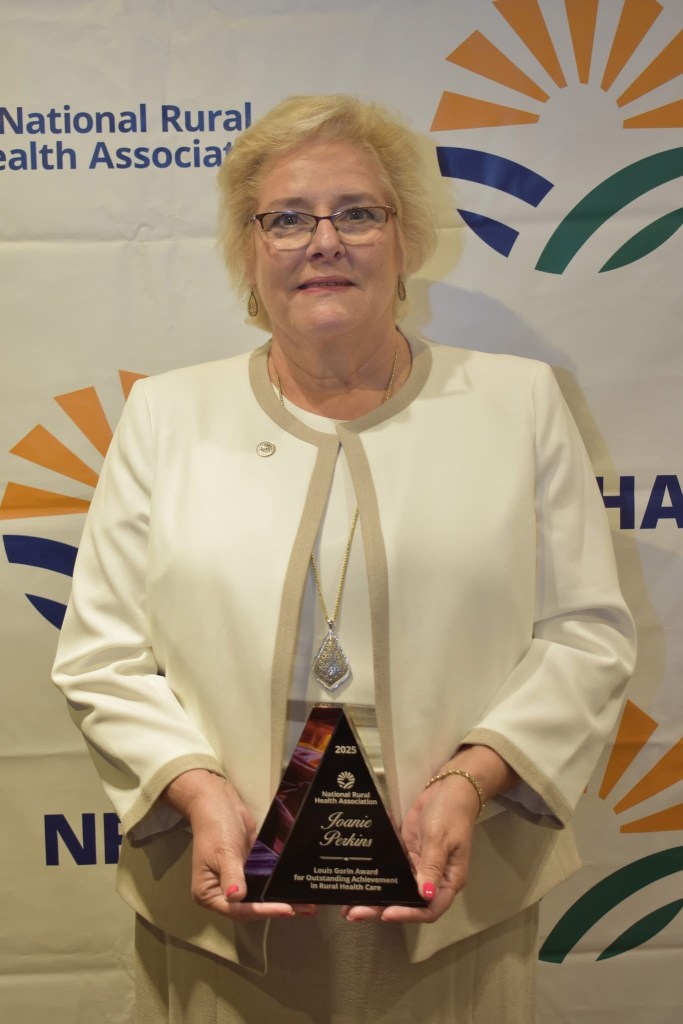
The National Rural Health Association (NRHA) recently awarded Joanie Perkins with the prestigious Louis Gorin Award for Outstanding Achievement in Rural Health Care.  The Louis Gorin Award for Outstanding Achievement in Rural Health Care. The award is presented annually in memory of Louis Gorin, a federal employee who for 25 years helped lead the design and authorization of health initiatives for rural America. Award recipients are selected based on their creativity, unselfishness, compassion, and cooperative attitude in seeking ways to make lasting contributions to rural health care.

Joanie serves as the Chief Compliance Officer for North Sunflower Medical Center in Ruleville, Mississippi. Not only has Joanie been among the strongest supporters of rural healthcare in the State of Mississippi, but she has been a strong advocate for rural health policy across the nation. Both a leader with NRHA and the National Association of Rural Health Clinics (NARHC), Joanie is a true champion for rural health and the rural communities that we love.

We are very proud of Joanie and all that she has done for our Association, our state and our nation. Congratulations Joanie!