RHCs to Receive Reimbursement Increase

The Mississippi Division of Medicaid recently announced that rural health clinics in Mississippi will receive a 1.9% increase in reimbursement for Medicaid encounters.  This rate increase will go into effect beginning January 1, 2020 for all RHCs in the state.  This reimbursement was initially passed by Congress and was funneled down through the Mississippi Division of Medicaid accordingly.

All clinics should have received a notice from the Division stating the increased rate and their new AIR including the 1.9% increase.

Click here to learn more.

For questions, contact Joe Jackson with the Division of Medicaid at 601.359.4040.

MRHA Partner Releases Book Focused on Hospital Survival

“Rural Hospital Renaissance” Gives Nation’s Struggling Rural
Hospitals Pathway to Growth and Revival”

New book and survival assessment tool provide at-risk hospitals with
a blueprint for engaging leadership, staff and patients to reverse the 
epidemic of closures and start growing.

A fifth of the nation’s rural hospitals are nearing collapse, according to North Carolina’s Sheps Center for Health Services Research, and 2019 is on pace to record the highest number of closings ever. With rural hospital closures at a crisis point, finding the pathway back to growth has never been more urgent.

“Rural Hospital Renaissance,” the new book by Brian Lee, one of North America’s leading experts in the field of Five Star patient experience, offers rural hospitals a proven formula for achieving a breakthrough in the patient experience to transform their future prospects from decline and survival to growth and revival.

“A cultural renaissance is needed in healthcare today,” says Lee, of the industry’s renewed focus on improving the patient experience. “The magic takes place when leaders truly engage the frontline with a ‘License to Please’ bundle of empowerment skills that transform their task-driven efforts to mindful presence and kindness. This book provides a step-by-step blueprint for transforming hospital culture and engaging caregivers to create a healing experience that patients will enthusiastically recommend.”

Lee says the patient experience is critical for rural hospitals, where patient volumes are declining due to the “drive-by factor” as tens of millions of dollars are lost to competing nearby urban tertiary hospitals. Because patients in these communities often rely on recommendations from their neighbors, friends and family when selecting a healthcare provider, “advertising will not bring back patients who don’t like you,” Lee emphasizes. “Word of mouth, will.”

“Rural Hospital Renaissance” explores evidence-based best practices that rural hospitals should take to engage patients and create a positive experience of healing kindness, including the four must-haves to become the hospital patients recommend: a culture of caring, frontline engagement, leadership and patient engagement.

“The patient experiences empathy and compassion through the actions of empowered frontline caregivers who become ‘patient relationship experts,’” Lee explains. “That’s why moving from decline and survival to growth and revival takes a strong commitment and some simple but profound changes in leadership and frontline behaviors. By following the practical, easy-to-do best practices outlined in this book, a renaissance is possible for every rural hospital. These are mostly simple things that leaders and caregivers can do while they’re doing what they already do, and they don’t cost a cent.”

Included in the book, Lee and his company Custom Learning Systems (CLS) introduced the Rural Hospital Renaissance “Survival Index” tool to help hospitals gauge their risk. While conventional research focuses on lagging indicators such as financial and volume factors tied to revenue, the Survival Index takes a proactive, comprehensive view by examining all the leading quality indicators that ultimately impact a hospital’s ability to survive in today’s economy.

Also launching as part of this effort is “SavingRuralHospitals.com,” and Facebook page “Saving Rural Hospitals” dedicated to addressing the epidemic of rural hospital closings. SavingRuralHospitals.com offers insights and resources, including the Survival Index Tool, for healthcare leaders and anyone who has an interest in being part of this movement.

Lee formally released “Rural Hospital Renaissance” in his keynote address to the Indiana Rural Health Association on National Rural Health Day, November 21, 2019.

About Brian Lee

Learn more about Lee here.

About Custom Learning Systems Ltd. (CLS)

Learn more.

Contact Bruce Lee at bruce@customlearning.com or by phone at 1-800-667-7325 ext. 213

Message from Charles James Regarding RHC Modernization Act Analysis

Below is a message from Charles James, president and CEO of the North American Healthcare Management Services, regarding the need for clinics to modernize and the need for the RHC Modernization Act.  We thought this was good to share!


Dear all –

I had a chat with John Gale after a recent exchange on the NRHA Grassroots listserve.  I had also recently heard John on an a radio Rural Hospital Closure Interview with a Kaiser Health News reporter, on which John did a great job framing our crisis.  (I had been meaning to call him!)

The listserve exchange demonstrated the persistent friction and misunderstanding b/w RHCs and FQHCs.  For me – all conversations lead to the the RHC Modernization Act. (Right – Bill 😉) John brought up the topic of the also persistent need for RHC data.  His team, Maine Rural Health Research Center/University of Southern Maine, recently released an analysis which demonstrates what many of us know and have discussed.  John and I also discussed RHCs lack of participation in Quality Payment Programs.  John was gracious enough to forward me their study, as well as recent presentations of his.  He also allowed me to share them.  I found them essential reading and thought you would too.

My own summary is that:

  1. Data supports our need to get in front of CMS on “RHC Modenization”, and the existential threat of of “site neutral payments” to PBRHCs.
  2. RHCs need to get IN on Quality.  Easy solutions exist:  PCMH = Advanced APM.  State Quality Program participation counts as well, in line with recent CMS-QPP guidance.  (eg MO has a fantastic PCMH program)
  3. RHCs could participate in Quality Payment Programs via HCPCS Code reported on their UB04 for various quality measures and UDS reporting.
  4. We must continue and strengthen our conversation with our FQHC cousins on how to collaborate, how we fit with one another, and how we differ.

That is likely more than $.50, but there it is.  I look forward to speaking with you all –

Best Regards –

Charles A. James, Jr.

President and CEO

North American Healthcare Management Services

9245 Watson Industrial Park • St. Louis, Missouri 63126

888.968.0076 Office

314.560.0098 Cell

www.northamericanhms.com


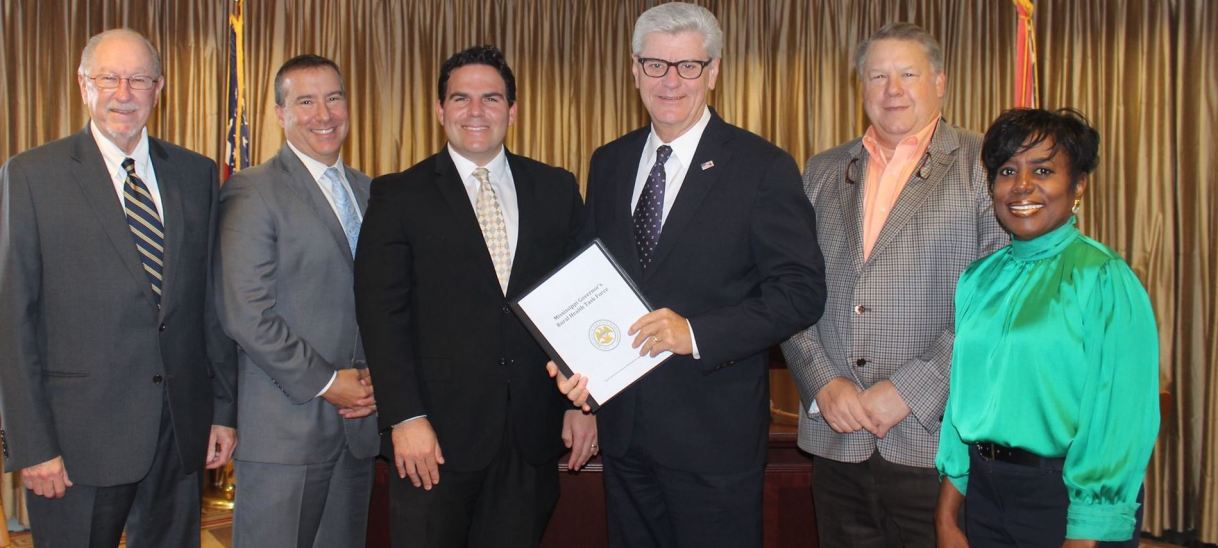
Mississippi Governor’s Rural Health Task Force Report Released

It is my pleasure to report to you that the Mississippi Governor’s Rural Health Task Force report was delivered to Gov. Phil Bryant on Monday of this week.  This report is the culmination of multiple meetings across four months with a hand-picked committee of fifteen professionals, many of which are active MRHA members.  I had the pleasure of serving as the chair of this task force, representing and considering each of you as we had discussions and considerations of how to improve our state’s rural health system.

The task force focused on three key areas: sustaining and evaluating the current healthcare infrastructure, growing access, and transforming current healthcare practices into those of the future. These areas were intended to determine the root causes of Mississippi’s rural health issues and provide solutions specific to addressing those solutions.

The solutions in this report are those that the task force felt would best help to solve Mississippi’s rural health concerns.  The solutions include policy and legislative recommendations as well as opportunities for rural health strategy.

Now that the report is finished, the work can begin!  This report will serve as a roadmap for Mississippi for years to come, and we look forward to being a dedicated partner for substantial, system-wide improvements.

Download the Governor’s Rural Health Task Force report

Thank you for your continued membership, confidence and support.  We cannot do this without you!

Sincerely,

Ryan Kelly
Executive Director
Mississippi Rural Health Association

NRHA Hosts Summer Leadership Symposium

Each year the National Rural Health Association hosts its summer leadership symposium.  This event brings together association leaders from across the country to learn from one another and share best practices on operating a rural health association and growing outreach and involvement in each respective state.  Ryan Kelly represented Mississippi at this meeting and was able to share many of the great updates from Mississippi.
“As the MRHA has grown in size and scope, the association has become a leader in the nation by helping other, smaller associations to learn how to develop membership and run events and programs.  And, in turn, we have learned a great deal from other associations,” responded Kelly.

To learn more about the National Rural Health Association and to join online, visit www.ruralhealthweb.org.

MRHA Leaders Attend NARHC Conference in St. Louis

MRHA leaders Sharon Turcotte (MRHA president, Rush Health Systems), Susan Campbell (MRHA past-president, Rush Health Systems), Paula Turner (MRHA 2017 president, North Mississippi Health Systems), and Sherry Lindley (MRHA secretary, North Mississippi Health Systems) attended the National Association of Rural Health Clinics (NARHC) meeting this week in St. Louis.  At this meeting, Susan Campbell was inducted as a new member of the NARHC board of directors.  Congrats to Susan, and a big thank you for these leaders attending and learning more about rural health clinic operations.

Mississippi Cares Plan Offers Medicaid Reform Option

The Mississippi Hospital Association recently announced the development of a new health insurance model that would leverage Medicaid expansion dollars under the Affordable Care Act, and merge these into an insurance product through Mississippi True to form a new insurance program for Medicaid-expansion eligible citizens.  This plan, called Mississippi Cares, would extend Medicaid benefits to the prescribed 138% of the poverty level as according to ACA guidelines, but it would require enrollees to be a part of the private health insurance company with a $25 per month premium.  They would then receive all Medicaid benefits, and all providers would bill such claims to the provider-owned health insurance plan for reimbursement.
This new model is proposed at this time, but has drawn a great deal of support from healthcare professionals and industry leaders.  Now Vice President Mike Pence and CMS Secretary Seema Verma launched this plan when they served in leadership in Indiana.  Dubbed “PenceCare,” this plan links public funds with private industry to help solve one of Mississippi’s greatest healthcare issues, providing health insurance for the working poor.
More to come on the development of this new insurance model.

An Interesting But Costly Idea – Medicare X

By Ryan Kelly –

A delegation from Mississippi, including Michael Nester, Tommy Bartlett, Joanie Perkins, Tasha Brown, Alvin Hoover, Paul Gardner and myself, are in Washington D.C. this week to discuss rural health policy and legislation with fellow rural professionals and elected officials and staff.

We had the pleasure of hearing from Senator Tim Kaine (D-VA) and his experience and work to help with rural health improvement.  No doubt, Sen. Kaine has been a rural health champion and has supported good work at improving and supporting many vital programs.

He mentioned a “big idea” program today that I have heard before but not to the depth that he provided.  This program, dubbed Medicare X, would be a public insurance offering from Medicare but offered on the healthcare exchange for non-Medicare beneficiaries.  So essentially, anyone would be eligible to “buy in” to this policy  if they desired to do so.

In brief summary, Medicare X would provide all Medicare benefits plus meet all of the minimum essential benefits provided on the exchange via the requirements of the Affordable Care Act.

I have stated before the concern that we have with the minimum essential benefits of the ACA and the “metal plans” offered through the exchange – which has led to a crisis of “under insurance” in Mississippi.  What I see with Medicare X is a related issue.  Although the coverage of such a policy would be fantastic, I would be very concerned about the affordability of such a policy.

Currently, Mississippi Medicare beneficiaries cost Medicare $11,021 per year in cost, according to the Kaiser Foundation.  This is about the national average.  If we round up a bit for the assumed increase with adding the minimum essential benefits, and if nothing changes for the average cost per beneficiary, then we could naturally assume that the monthly premium for such a policy to be approximately $1,000 per month per beneficiary.

I’m not sure about you, but I don’t know many people that would pay $1,000 per month per person for Medicare X.

To Sen. Kaine’s benefit, it’s an effort to shore-up states like Mississippi where there is only one option on the health insurance exchange.  I admire the effort and understand that there could be a number of factors that, if implemented, could reduce the cost per person.  My recommendation would be to take the minimum essential benefits off of the table, and stagger the cost ratio based on a variety of health-related factors (age, sex, fitness level, etc).  This would help to provide better coverage at a more affordable price and encourage people to live healthier.

There are a number of “big ideas” on the table, alongside ideas including complete Medicare expansion, block granting Medicaid to states, and recreating new insurance plans with greater flexibility.  I think we need to understand the reality of what people need vs. what Washington wants before we make a decision on what direction to go.

MRHA Supports the All of Us Research Program

About the All of Us Research ProgramScreen Shot 2019-08-29 at 9.54.02 AM

The All of Us Research Program began national enrollment, inviting people ages 18 and older, regardless of health status, to join this momentous effort to advance individualized prevention, treatment and care for people of all backgrounds. Part of the National Institutes of Health, All of Us is expected to be the largest and most diverse longitudinal health research program ever developed.

Participants are asked to share different types of health and lifestyle information, including through online surveys and electronic health records, which will continue to be collected over the course of the program. Those who join will have access to study information and data about themselves, with choices about how much or little they want to receive.

Data that are collected will be broadly accessible to researchers of all kinds, including citizen scientists, to support thousands of studies across a wide range of different health topics. By doing so, they are hoping to discover how to more precisely prevent and treat other health conditions. Knowledge gained from this research could help researchers improve health for generations to come.

Why All of Us is Important for Patients

Health care is often “one size fits all” and is not able to fully consider differences in individuals’ lifestyles, environments, or biological makeup. This is because we have limited data from past research studies about how those elements interact. The average patient is often prescribed drugs and treatments as if they are all the same. Learning more about the differences between individuals can help researchers develop tailored treatments and care for all people.

How All of Us Benefits Health Care Providers

Today there are too few conditions with evidence and options for individualized care. Too often, patients from underserved communities have not been included in clinical research, and our ability to care for diverse populations is diminished as a result. More data, discoveries, and tools can help providers to give their patients customized care more easily, especially for those communities that are disproportionately impacted by health issues.

Why Diversity Matters

Historically, many segments of the U.S. population have been left behind in medical research, including people of color, sexual/gender minorities, those with lower socioeconomic and educational status, rural communities, and other groups. The result is significant health disparities. The All of Us Research Program seeks to help fill in the gaps of information about those communities that previously have not been well represented.

How to Join the All of Us Research Program

The program is seeking one million or more people from all walks of life to participate in this historic endeavor. Those interested in joining the program can do so by visiting, www.JoinAllofUs.org. Enrollment is open to all eligible adults who live in the United States.

Medicaid EASE Initiative aims to improve access to needed services for Medicaid beneficiaries – Physician visit limit to increase from 12 to 16 on Jan. 1, 2019

Effective Jan. 1, 2019, the Mississippi Division of Medicaid (DOM) is increasing the number of physician visits it covers for Medicaid beneficiaries, the first of a series of changes the agency plans to roll out in the coming year.

The move is part of the new Medicaid EASE Initiative — Enhancing Access to Services and Engagement — a bundle of programmatic changes aimed at bolstering Medicaid beneficiaries’ access to needed services in the most appropriate setting.

With the first phase of the EASE Initiative, DOM will increase the physician visit limit for beneficiaries from 12 to 16 visits per year. This increase supplements limit flexibility already in place for different populations of Medicaid beneficiaries. Beneficiaries in nursing homes, for instance, can receive up to 36 physician visits annually. Individuals who participate in the MississippiCAN program will continue to be eligible for enhanced services offered by the managed care company with which they are enrolled, which include unlimited physician visits. DOM will also continue to offer unlimited medically necessary physician visits for children up to age 21.

DOM plans to announce additional EASE Initiative reforms in the coming months. These projects are still in development and include increases to the monthly prescription drug limit and home health visit limit, behavioral health and substance use disorder reforms, and an effort to reduce potentially preventable hospital readmissions. DOM will share more information about these projects as they are developed.